
TABLE OF CONTENTS
Introduction
Following the great new SystmOne feature release, we are excited to announce the arrival of the new Ardens Auto-Review Results resources.
This new functionality on SystmOne has great potential to increase your efficiency and save you considerable time when reviewing results. It is essential however that clinical safety always come first for you, your practice and your patients.
Ardens has developed its new Auto-Review Results resources with clinical safety at the forefront, so they will not automatically review results if clinical input is required.
The Auto-review suite takes advantage of two functionality elements within SystmOne.
Auto-Filing: This is the logging into the system of any result that is returned from the hospital. They are filed, but not reviewed, so they show in the pathology inbox. However, the results are seen by the clinical reporting engine and thus will trigger an alert protocol, etc.
Auto-Review: This is the engine that allows for the application of a rule set (locally built or published to the unit) to be applied for a single test or the whole of the pathology inbox.
Process
Once a result is received it is automatically filed into the patient record (which allows the result to be viewed in the patient record and included in reports, protocols and other resources) but it still needs reviewing. The auto review system allows certain results to be marked as auto-reviewed if they pass certain rules. If the result does not pass these rules they will remain in the pathology inbox to be reviewed manually.
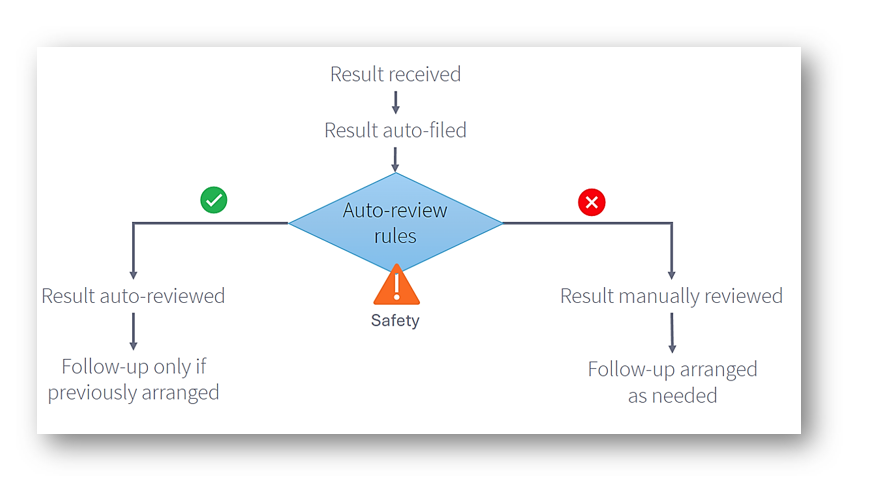
- Do you still want to follow-up the patient up?
- If so, book them in now, or
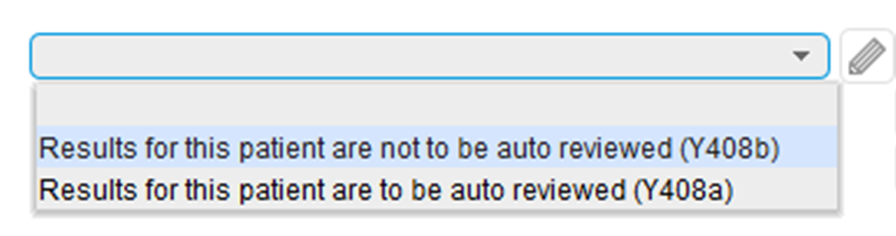
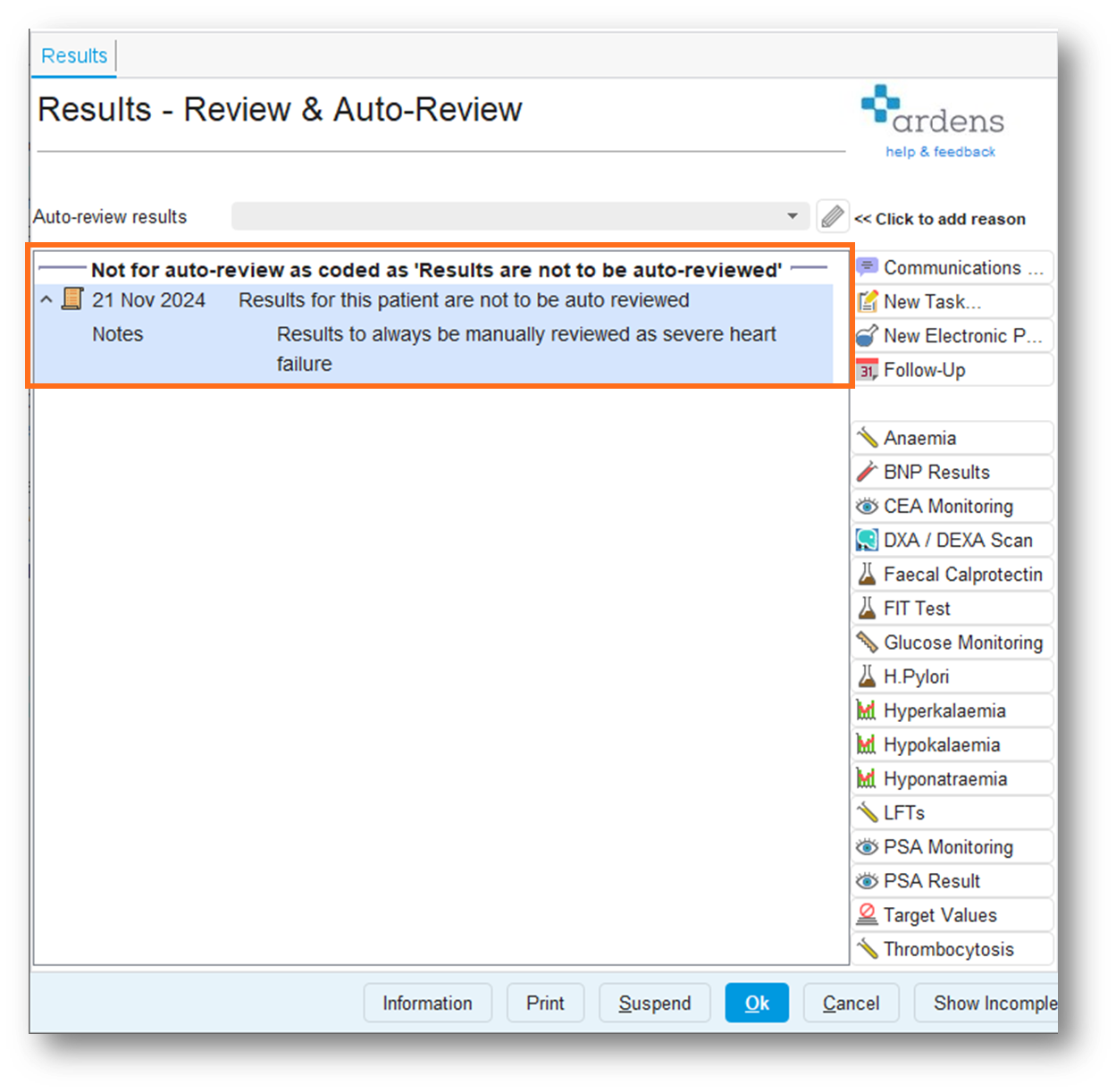
- Mark as ‘not for auto-review’ to ensure results will remain to be manually reviewed where follow-up can be decided
- What safety netting advice +/or advice about drug treatment/dosing should you give to the patient? Ideally, this should be explained when the test is ordered
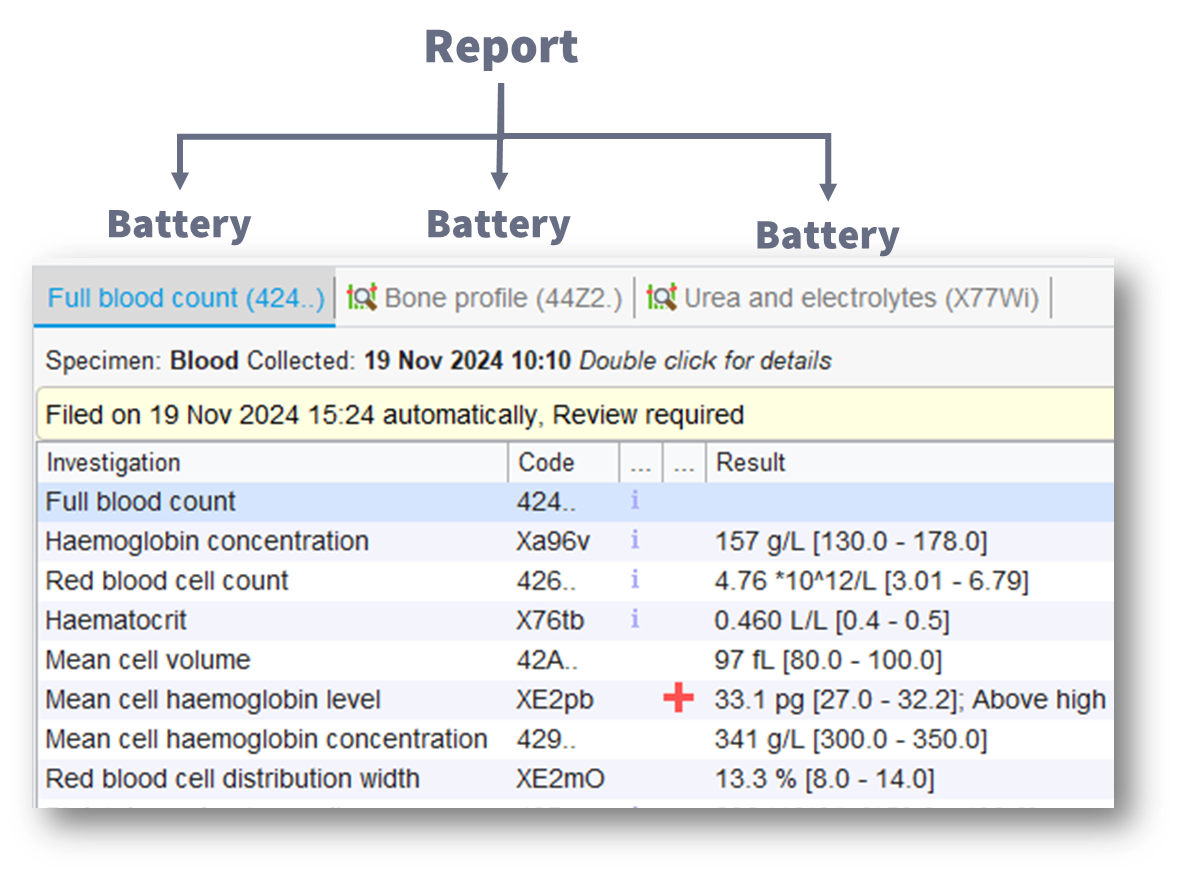
- A report is a grouping of one or more batteries requested at the same time
- A battery is a grouping of one or more results, such as a Full blood count.
- A result is a single result, such as haemoglobin concentration.
- Blood Tests
- ABO
- ANA
- Blood group
- Bone
- Coagulation
- Coeliac
- CRP
- ESR
- FBC
- Folate
- HbA1c
- INR
- LFTs
- NT-proBNP
- TSH
- UE
- Vit B12 & D
- Microbiology Tests
- Blood film
- Chlamydia
- Screening
- Bowel cancer
- Stool Tests
- Faecal Calprotectin
- H.Pylori
- Urine Tests
- ACR
- Bence Jones
Safety
As a result of this, we rely on each lab reporting results with lab ranges, which means we can make rules that work for multiple labs with different ranges, as the rules only ensure the value is in between the provided range.
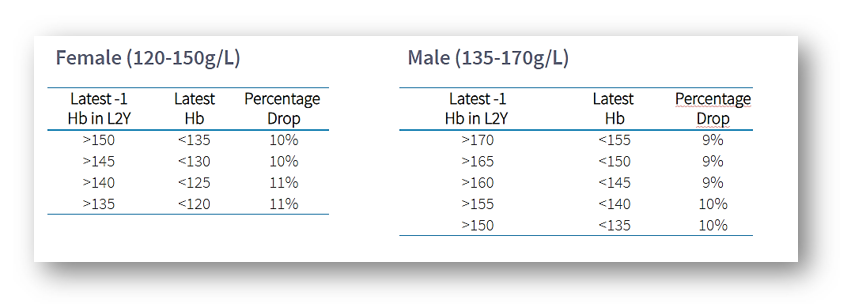
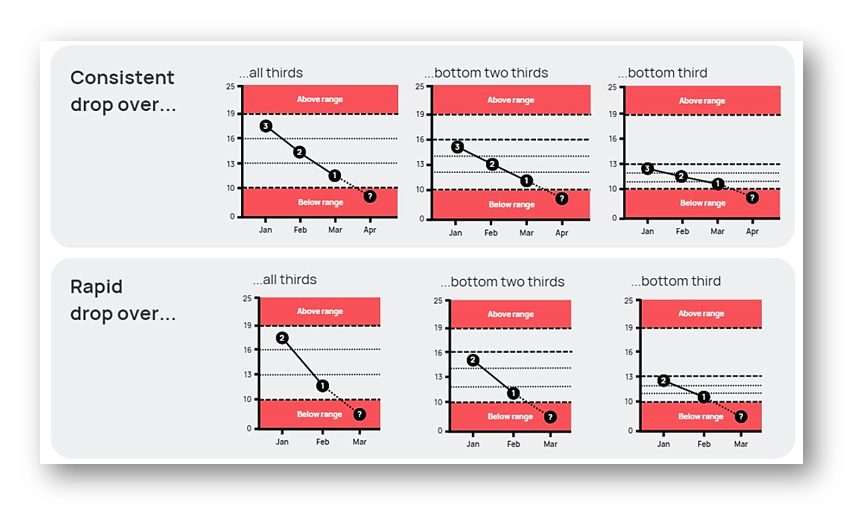
- A haemoglobin drop of 15 (9-11%) in the last 2 years despite being in the normal range
- On DMARDS & trend in last 1 year
- FBC - Drop in WCC/neutrophils/platelets or rise in eosinophils/MCV
- U&E - Rise in Creatinine
- LFT - Rise in ALT (excluding AST), drop in albumin
There are also specific circumstances where you may wish to always manually review a patient's results.
- FBC + haemoglobinopathy (including sickle cell) - As may have different ranges or targets
- ESR + polymyalgia rheumatica, temporal arteritis/GCA - As any rise may be significant
- TSH + thyroid cancer or hypopituitarism - As may have different ranges or targets
- Clotting/INR + on anticoagulant - As anticoagulant affects result
- Folic acid & iron + on oral supplementation - May consider stopping supplements
- Bone + on calcium supplements - As calcium supplements may alter the calcium components of the bone profile battery, so will need clinician interpretation in the light of supplementation
- Coeliac + IgA deficiency - As IgA deficiency may cause false negative results
- Folate + on folic acid - As the result will need clinician interpretation in the light of supplementation, and clinician review on the need for adjustments to folic acid supplementation
- Vit B12 + on B12 supplements/CHC - Re. B12 supplements, the result will need clinician interpretation in the light of supplementation, and clinician review on the need for adjustments to B12 supplementation. Re CHC, as this can lower total B12 concentrations without causing a deficiency
- Vit D + on Vitamin D - As the result will need clinician interpretation in the light of supplementation, and clinician review on the need for adjustments to Vitamin D supplementation
- HbA1c + haemoglobinopathy (including sickle cell) - As may have different ranges or targets
- HbA1c + severe anaemia (latest Hb <8g/dL) - As may have different ranges or targets
- HbA1c + medical history as per the table below
HbA1c mmol/mol | Considered normal or abnormal but expected if: |
21-41 | No pre-diabetes or diabetes type 1 or type 2 |
42-47 | Pre-diabetes |
48-57 | Diabetes Type 2 and diet only or on 1 drug with low hypoglycaemic risk |
53-57 | Diabetes Type 2 and on 2 or more drugs or on 1 drug with high hypoglycaemic risk |
- Remove all patients who are under 18 years old
- Remove all patients who are pregnant
- Remove all patients who have been coded as not for auto review.
- Filter for Male or Female
- Remove patients who have shown a significant trend up in the results over the last 2 years, with females looking at a trending range of 0 to 3 and males 0 to 2.5
Bone:
- Remove all patients who take calcium supplements
- Remove all patients who have oral anticoagulants on repeat
- Remove all patients who have recorded IgA deficiency
- Remove all patients who have polymyalgia rheumatica
- Remove all patients who have giant cell arteritis
- Filter for Male or Female
- Remove all patients who have a haemoglobinopathy
- Remove all patients who have been on a DMARD in the last 12 months who also have one of the following:
- A significant decreasing trend in white blood count over the last 12 months, with a trending range of 4.0-9.6
- A significant decreasing trend in neutrophil over the last 12 months, with a trending range of 2.0-6.1
- A significant decreasing trend in platelet count over the last 12 months, with a trending range of 150-400
- A significant decreasing trend in mean corpuscular volume over the last 12 months, with a trending range of 83-100
- A significant decreasing trend in eosinophil over the last 12 months, with a trending range of 0.1-0.4
- Remove patients who have shown a significant trend down in the Haemoglobin concentration results over the last 2 years (C. 9-11%), with females looking at a trending range of 120-150 and males 135-170.
- Remove all patients who have Folic acid on repeat
- Remove all patients who have a haemoglobinopathy
- Remove all patients who have severe anaemia (latest Hb <8)
- Remove all patients who have a haemoglobinopathy
- Remove all patients who have severe anaemia (latest Hb <8)
- Remove all patients whose latest reading is >=42 with the two prior readings being below 42
- Remove all patients who have a significant increasing trend over the last 2 years, looking at a trending range of 42-47.9
- Remove all patients who have a haemoglobinopathy
- Remove all patients who have severe Anaemia (latest Hb <8)
- Remove all patients who have a significant increasing trend over the last 2 years, looking at a trending range of 48-52.9
- Remove all patients who have a haemoglobinopathy
- Remove all patients who have severe Anaemia (latest Hb <8)
- Remove all patients who have a significant increasing trend over the last 2 years, looking at a trending range of 53-57.9
- Remove all patients who have oral anticoagulants on repeat
- Remove all patients who have been on a DMARD in the last 12 months who also have one or both of the following:
- A significant decreasing trend in albumin over the last 12 months, looking at females with a trending range of 35-45 and males 35-45
- A significant decreasing trend in alanine aminotransferase over the last 12 months, looking at females with a trending range of 0-33 and males 0-39
- Remove all patients with hypopituitarism
- Remove all patients with a malignant tumour of the thyroid
- Remove all patients who have been on a DMARD in the last 12 months who also have the following:
- A significant decreasing trend in creatinine over the last 12 months, looking at females with a trending range of 44-80 and males 59-104
- Remove all patients who have vitamin B12 on repeat
- Remove all patients who have combined hormonal contraception on repeat
- Remove all patients who have vitamin D on repeat
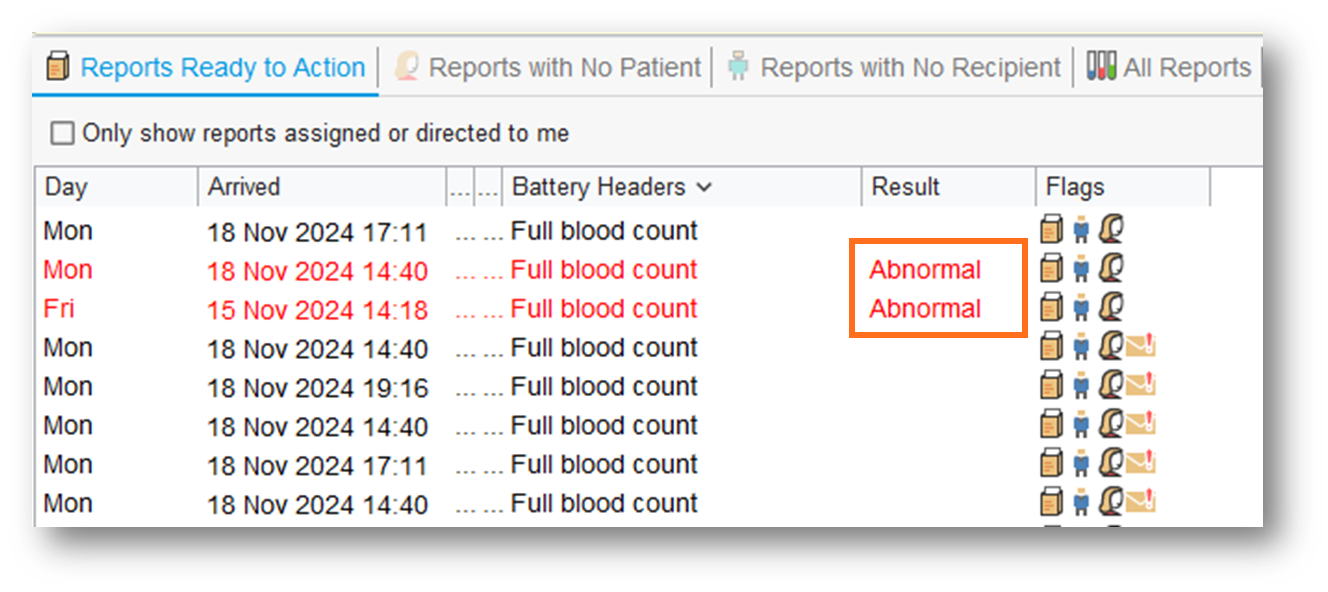
We have recently updated the Ardens auto-review rules to include laboratory reports that contain multiple result batteries, even when the laboratory marks the overall report as abnormal.
This change allows the rules to assess individual batteries within a report, enabling normal batteries to be auto-reviewed and cleared even when they are accompanied by a separate abnormal result battery in the same report. Previously, auto-review rules only ran on reports marked as normal or unknown, which meant many normal-result batteries could not be auto-reviewed and cleared when included in a report marked as abnormal.
There is no increased risk that the remaining abnormal results will be filed without review. If a battery component contains an abnormal result, the auto-review rules will fail because the result falls outside the laboratory reference range, ensuring that it remains subject to manual review.
Enable
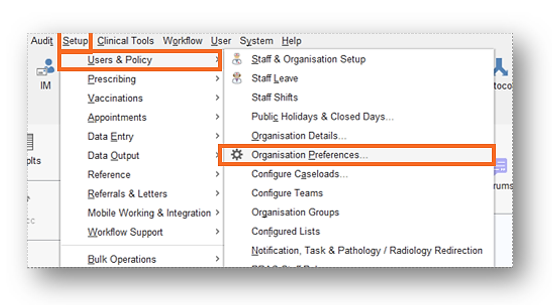
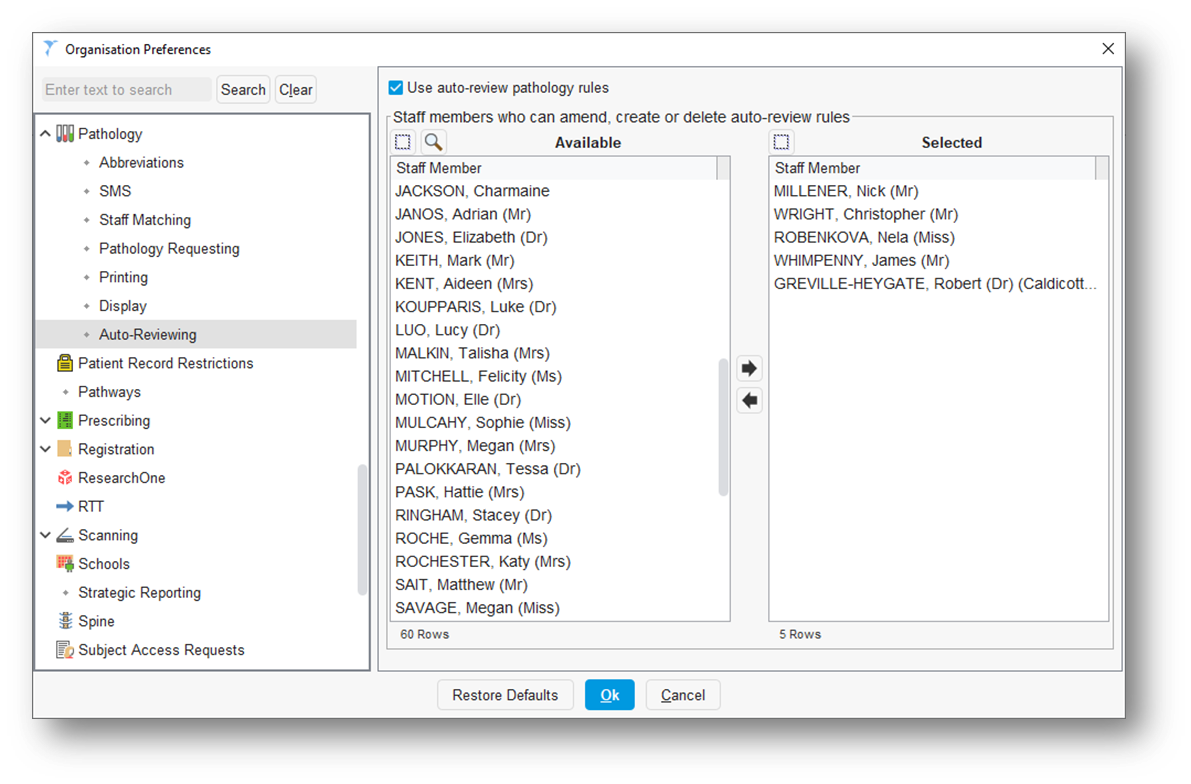
Create
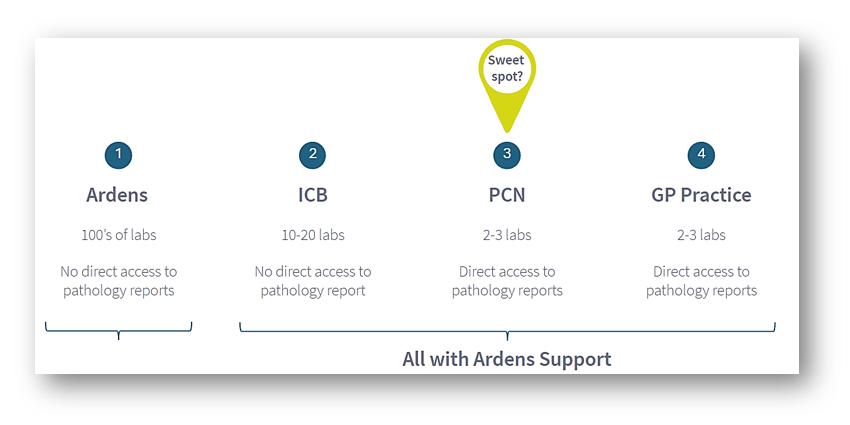
- Number of laboratories
- Laboratory changing codes, text or ranges
- Laboratory misses one result from normal battery
- Newly published guidance
- Different clinician tolerance thresholds
- Updating rules + communicating to practices
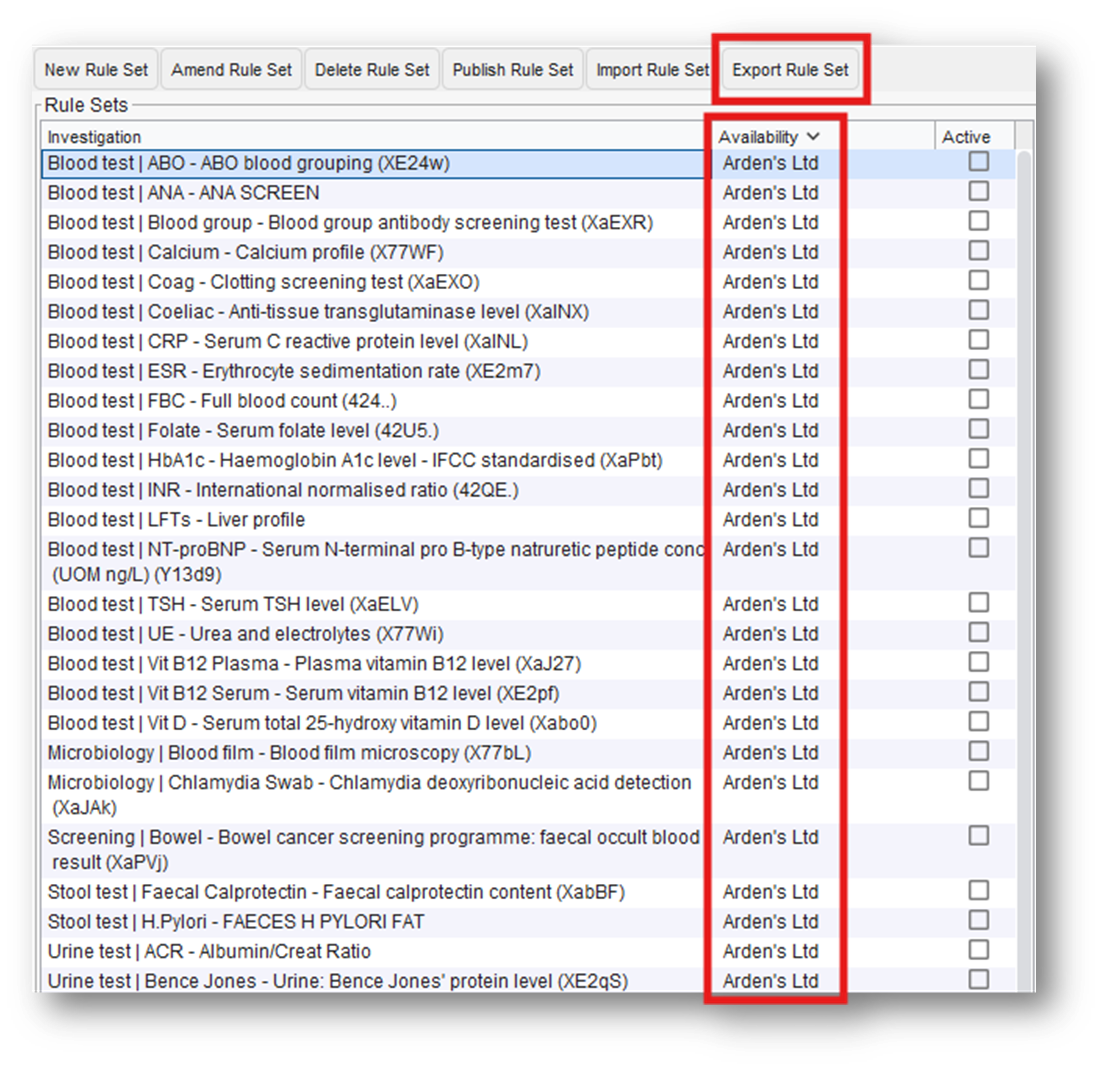
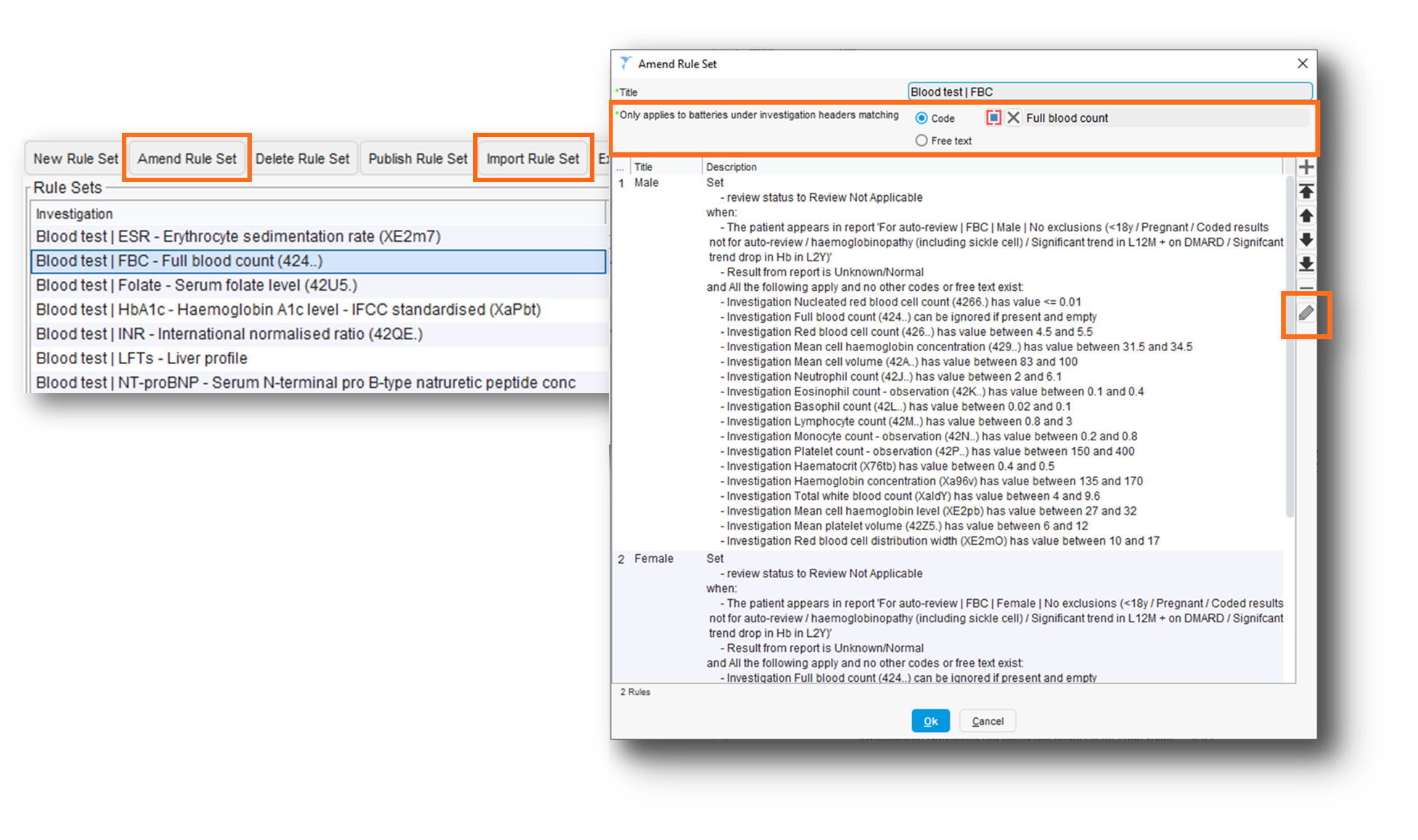
Activate
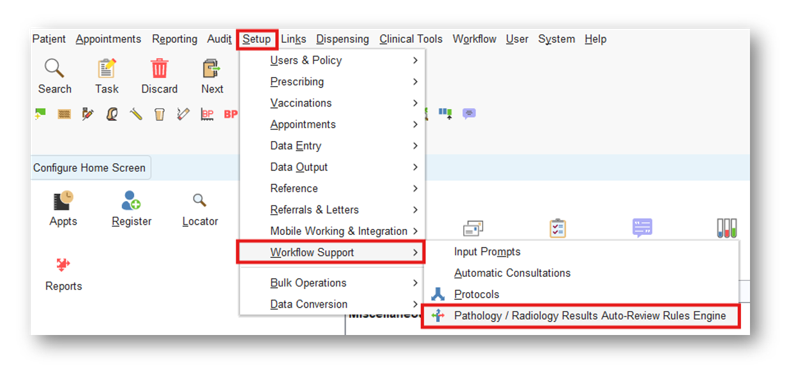
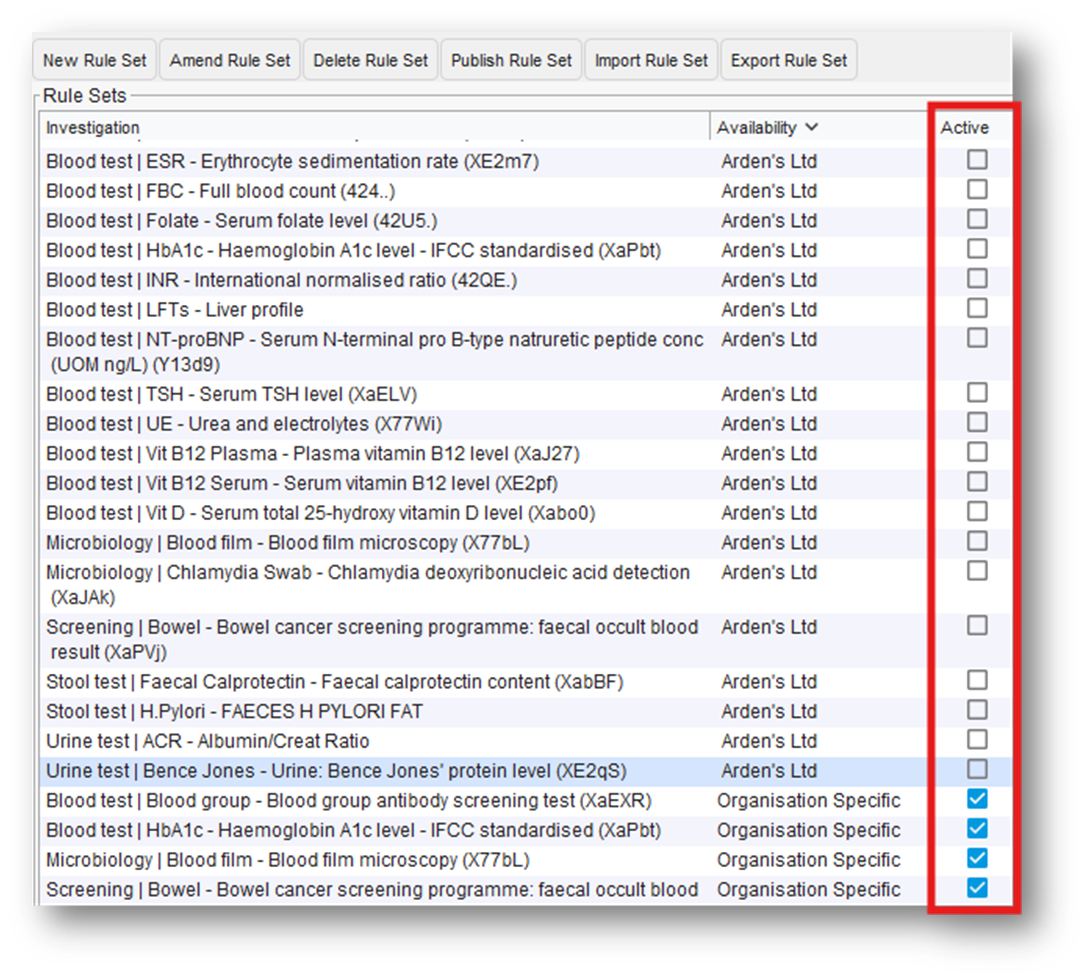
To activate an individual rule, go to 'Setup > Workflow Support > Pathology / Radiology Results Auto-Review Rules Engine'.
You will then see a list of 'Rule Sets', and which ones are 'Active'. To Activate a rule, simply tick the box next to it.
Apply
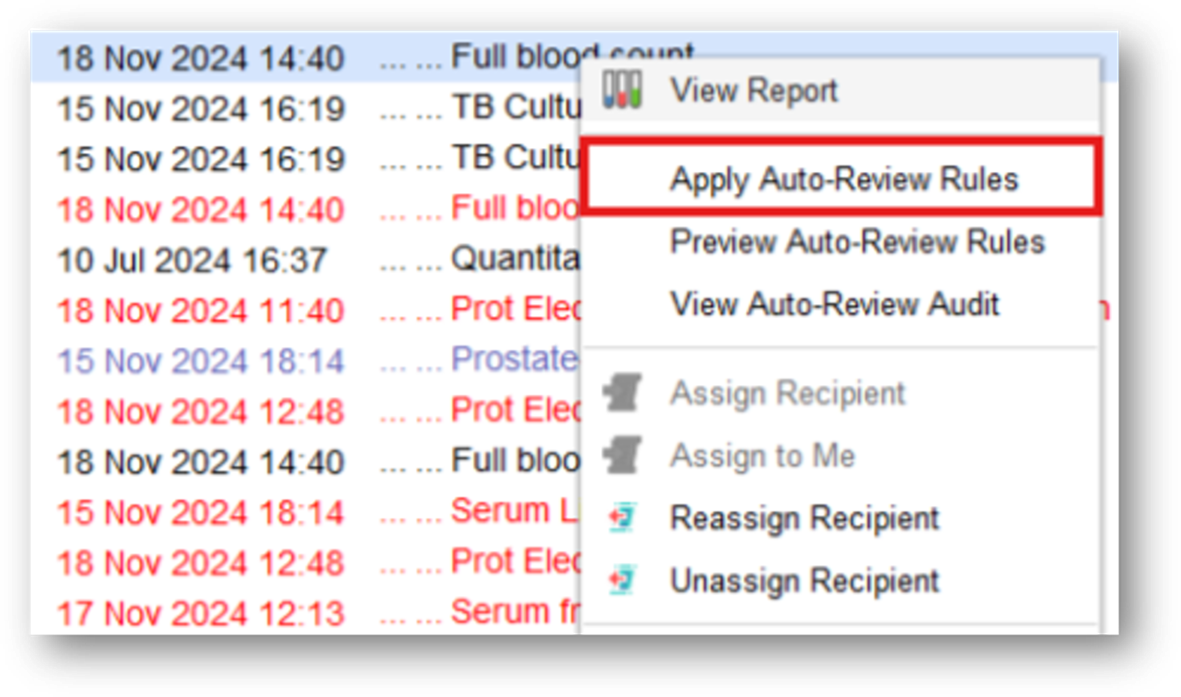
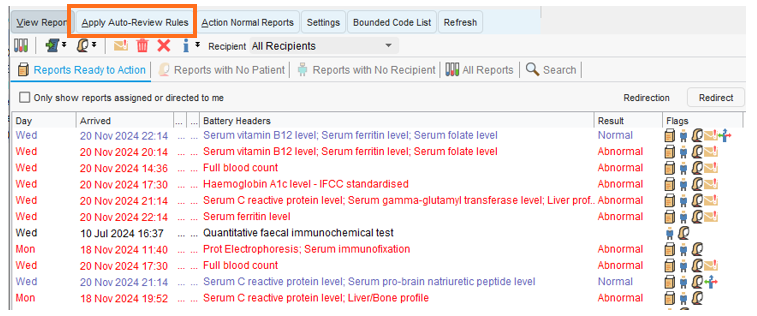
In the pathology inbox, select ‘Apply Auto-Review Roles’ button to run all active rules against new reports, which have not yet been run through the engine. The auto-review rules run across the whole inbox, regardless of recipient. If you filter to registered practice, then only runs for these patients if you doing shared administration.
Audit
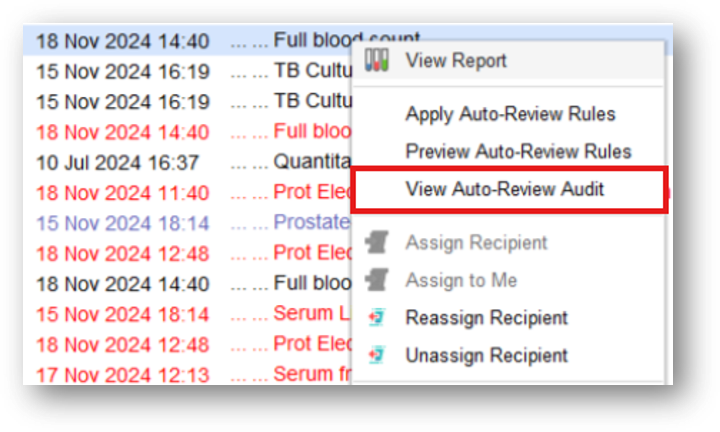
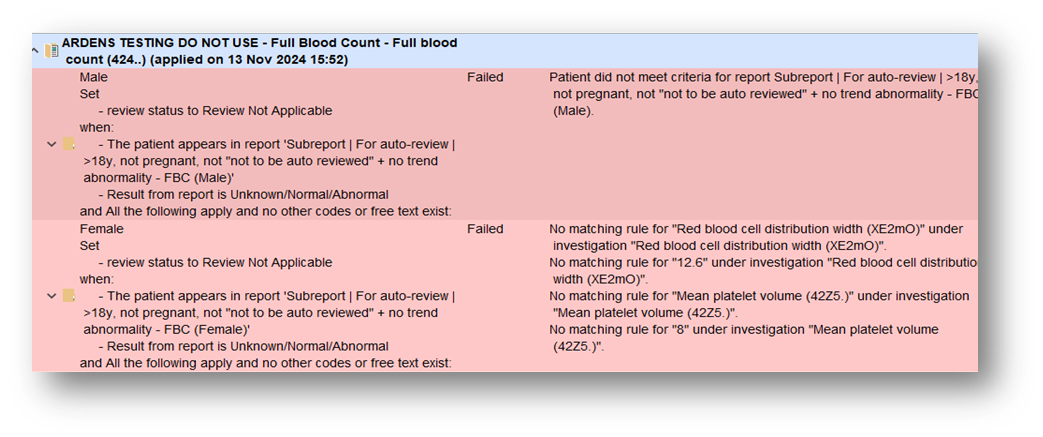
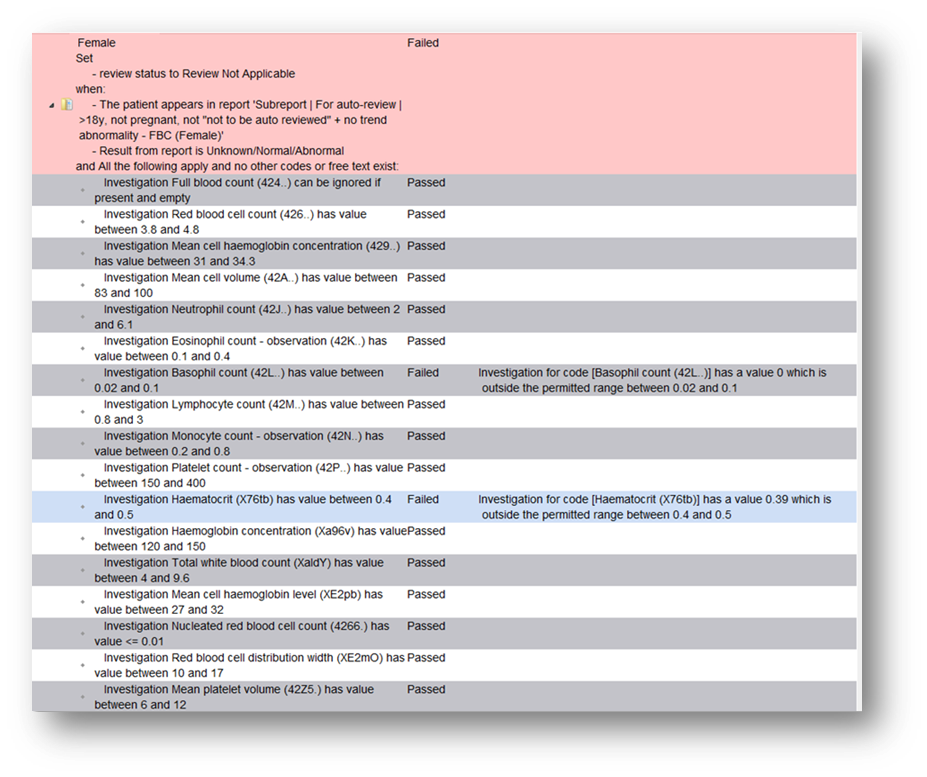
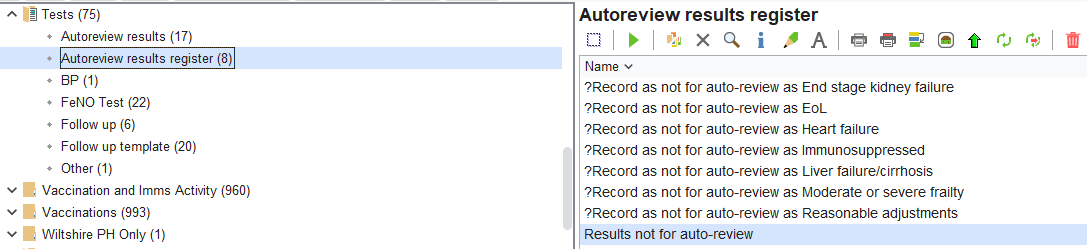
If you wish to review patients that have been auto-reviewed in the last 12 months or within the last month, you can use the reports found in Ardens Ltd → Tests → Autoreview results activity, which will provide a breakdown.